MOK HOUSE is a 100% Indigenous-owned Australian production company, and commercial photography is one of our core services. We match the right photographer to each brief rather than sending the same shooter to every job. Brand and corporate, product, events, portraits, and on-location work: one contract, single accountability, senior specialists assembled around the shoot.
Commercial Photography Australia
What makes a good commercial photography supplier in Australia?
The thing that separates a good commercial photography supplier from a risky one is not the camera: it is whether the right photographer is matched to the brief, and whether one accountable party owns the result. A product photographer, a corporate portrait specialist, an event shooter, and an architectural photographer are different disciplines. A supplier who sends the same person to every job is betting your brief on a generalist.
Australia has more than 10,364 professional photographic services businesses, a number that grew at 6.0% a year between 2020 and 2025 (IBISWorld, 2025). Quality and specialisation vary enormously across that field, and the brand on the invoice tells a buyer very little about who will actually be on the shoot.
A specialist network model addresses this directly. Rather than staffing from a fixed roster, the supplier selects the photographer whose discipline matches the brief, and coordinates the shoot under a single contract.
| Fixed-roster supplier | Specialist network model |
| Same photographer for every brief | Photographer matched to the discipline |
| Generalist across all subjects | Specialist in the subject you need |
| Separate bookings for shoot, retouch, licensing | One contract, one point of accountability |
| Availability drives who shoots | The brief drives who shoots |
For buyers, this means the portrait specialist shoots your executives, the product specialist shoots your range, and you manage one relationship rather than a roster.
What does a commercial photography service deliver?
A full commercial photography service manages the shoot end to end, from brief and pre-production through to the final licensed images. Depending on scope, that includes:
- Pre-production: brief development, art direction, shot lists, location scouting, casting and talent, scheduling, permits, and access
- Production: the photographer and assisting crew, lighting, styling, on-location or studio set-up, and direction on the day
- Post-production: culling, editing, colour, retouching, and formatting for each destination (web, print, social, large-format)
- Delivery and licensing: final images supplied at the correct resolutions, with clear usage rights for the intended channels and term
The practical value of a single supplier is that one party is accountable for the whole chain. Rather than booking a photographer, a retoucher, and a stylist separately and hoping they align, the brief, the shoot, and the delivered images sit under one contract with one point of contact.
Common photography disciplines a buyer commissions include brand and corporate imagery, executive and team portraits, product and commercial work, event and conference coverage, architectural and interior, and documentary or on-location storytelling. The right specialist for each is rarely the same person.
Photography for government clients
Federal government agencies can engage an Indigenous-owned supplier for photography directly, without running an open tender. Under Exemption 16 of the Commonwealth Procurement Rules, a Commonwealth buyer can purchase directly from an Indigenous small-to-medium enterprise for a contract of any size and value, subject to a value-for-money check that can be satisfied through a simple quote process (NIAA, Indigenous Procurement Policy). There is no value cap on this pathway, and it applies to goods and services generally, including creative and content work such as photography.
This sits alongside the Indigenous Procurement Policy’s other mechanisms. The Mandatory Set-Aside requires a buyer to first offer the work to an Indigenous SME on a value-for-money basis for any contract valued between $80,000 and $200,000 GST inclusive, and for anything delivered in remote Australia. Mandatory Minimum Requirements apply to contracts of $7.5 million or more in specified industry sectors. From 1 July 2025 the Commonwealth target for spend with Indigenous businesses rose to 3 percent, increasing each year toward 4 percent by 2029-30 (NIAA).
Eligibility for these pathways is defined by Indigenous ownership: currently at least 50 percent, rising to 51 percent owned and controlled (or registration with the Office of the Registrar of Indigenous Corporations) from 1 July 2026. Supply Nation Certification is the standard way a buyer verifies that a supplier meets the test, and certified suppliers are listed on Supply Nation’s Indigenous Business Direct.
State frameworks differ. In NSW, for example, the Aboriginal Procurement Policy lets agencies engage an Aboriginal business directly on a single quote for contracts up to $250,000, even where a panel exists. If you are procuring outside the Commonwealth, check the rules that apply in your jurisdiction.
For government communications teams with Reconciliation Action Plan commitments or IPP targets, engaging an Indigenous-owned supplier directly delivers the photography the brief requires and counts toward the relevant target.
Photography for corporate clients
For corporate clients, the questions are consistency and rights. Can the supplier deliver imagery that holds together across executives, offices, products, and events, in one recognisable style? And are the usage rights clear, so the images can be used across the channels and for the period the brand actually needs?
A single supplier with end-to-end scope is a different proposition from booking a photographer who then bills separately for retouching and hands over images with unclear licensing. One party briefs the shoot, directs the day, delivers the edited images, and sets out the usage rights in writing. The brand manages one relationship and one consistent library, not a patchwork of shoots that do not match.
Why the specialist network model delivers better photography
The specialist network model delivers better photography because the photographer is chosen for the subject, not assigned by availability. Product photography rewards a controlled studio and a lighting specialist; executive portraiture rewards someone who can direct people and work fast; event coverage rewards a documentary instinct. Treating these as one job is where commissioned photography looks generic.
As AI-generated and stock imagery become more common, original photography is the clearer differentiator. Nearly three quarters of marketers now use AI for media creation (HubSpot, 2026), which means distinctive, genuinely shot images stand out more, not less. Original work also avoids the licensing and authenticity problems that come with stock.
For government clients specifically, the model also gives a cleaner probity position. The supplier holds the prime contract and manages any assisting crew, retouching, and usage-rights arrangements under its own terms, rather than the buyer coordinating several suppliers. Accountability sits in one place.
Where MOK HOUSE fits
MOK HOUSE is a 100% Indigenous-owned Australian production company delivering photography, video, audio, and content. For each photography brief, we match the right photographer and crew from a network of senior Australian talent, and run the shoot under a single MOK HOUSE contract, from brief through to final licensed images.
Government and corporate clients work with one accountable partner rather than booking and coordinating separate shooters and retouchers. We also produce culturally grounded, on-location photography for First Nations and community contexts where that is what the brief calls for.
Contact us to discuss your photography brief →
Frequently asked questions
Can a government agency engage a photographer directly?
Yes. Federal agencies can engage an Indigenous-owned SME directly under Exemption 16 of the Commonwealth Procurement Rules, at any contract value, subject to a value-for-money check that a simple quote can satisfy. Eligibility is based on Indigenous ownership, verified through Supply Nation Certification. State frameworks, such as the NSW Aboriginal Procurement Policy, have their own direct-engagement rules.
What is IPP Exemption 16?
Exemption 16 is a provision of the Commonwealth Procurement Rules that lets federal agencies buy directly from an Indigenous SME without running an open tender, at any contract value, subject to a value-for-money assessment. It applies to goods and services generally, including photography and other creative work. MOK HOUSE is eligible as a 100% Indigenous-owned, Supply Nation Certified supplier.
How much does commercial photography cost in Australia?
Cost depends on the shoot: the photographer’s discipline, half or full days, location versus studio, talent and styling, retouching, and the usage rights you need. Simpler shoots start in the low four figures; multi-day, multi-location, or campaign work runs higher. Usage and licensing terms also affect the fee. The reliable approach is to brief the scope and request a quote. [TO CONFIRM: validate ranges against current quoting before publish.]
Who owns the photos and how can we use them?
Usage rights are agreed up front and set out in writing. A brief should state where the images will appear, for how long, and whether the rights are exclusive, because those terms shape both the licence and the fee. MOK HOUSE delivers final images with clear usage rights for the agreed channels and term.
What types of photography does MOK HOUSE produce?
MOK HOUSE produces brand and corporate imagery, executive and team portraits, product and commercial photography, event and conference coverage, architectural and on-location work, and culturally grounded photography for First Nations contexts. Each brief is matched to a specialist in that discipline under a single MOK HOUSE contract.

A business can have an exceptional product, a brilliant team and a very clear idea of what it stands for, but that clarity only gets you so far if nobody outside the company can see it. This is where creative tends to be misunderstood. It is still often treated as the layer applied once the […]
MOK’HOUSE operates as a creative production house, connecting strategy, design, content, production, music and digital capability through a flexible project-led model.
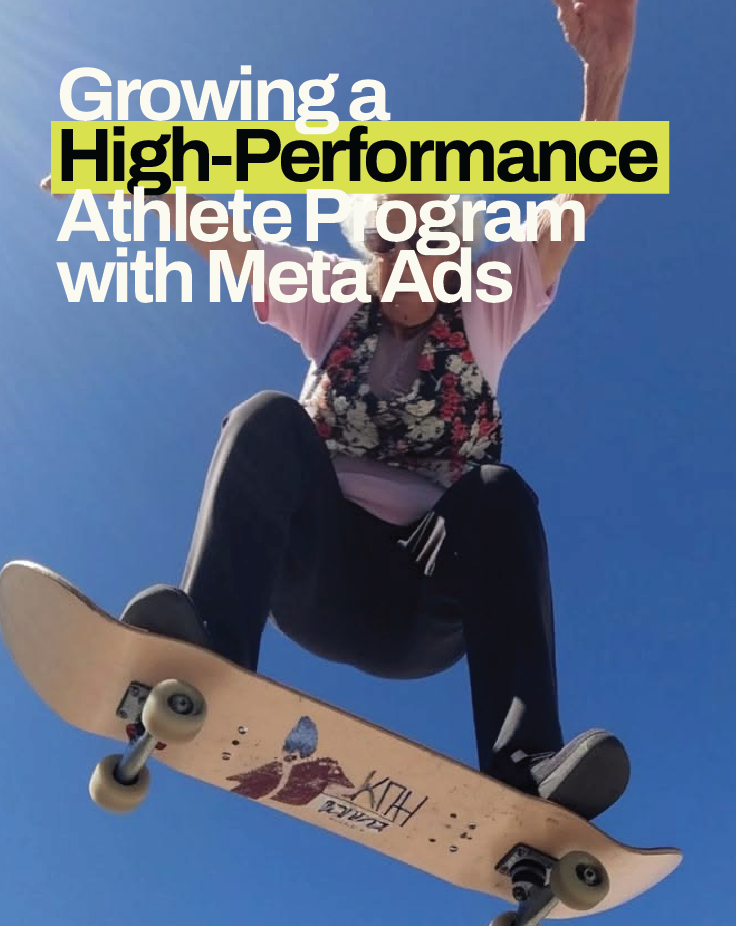
A case study on how MOK’HOUSE used Meta Ads to help Phoenix Performance grow a high-performance athlete program through strategy, creative testing and long-term optimisation.
Indigenous procurement is more than a policy requirement. Discover how genuine partnerships, cultural understanding and long-term collaboration create lasting value for organisations, communities and the creative industry.